When property owners, designers, and facility managers search for a flooring solution that refuses to compromise between visual appeal and structural durability, spc flooring consistently rises to the top of the conversation. The category has matured rapidly over the past decade, driven by advances in rigid core technology and surface printing that allow manufacturers to replicate the warmth of natural wood, the cool elegance of stone, and even contemporary abstract designs with remarkable accuracy. Understanding how this balance is achieved requires looking at both the material science behind the product and the engineering decisions that define its construction.

SPC flooring, which stands for Stone Plastic Composite, is built on a core that blends limestone powder with polyvinyl chloride and stabilizing additives. This rigid core is what separates spc flooring from older flexible vinyl products, giving it the dimensional stability that makes it suitable for a wide range of commercial and residential applications. The combination of a hard, stable base with high-resolution decorative layers is precisely why spc flooring has gained such strong traction across hospitality, healthcare, retail, and residential renovation markets globally.
The Material Architecture Behind SPC Flooring
Understanding the Rigid Core Composition
The core of spc flooring is composed primarily of natural limestone powder, PVC resin, and stabilizers that are compressed and formed under heat into a dense, rigid plank. This limestone-rich composition gives the product its characteristic hardness and low expansion coefficient, which means the floor remains dimensionally stable even when exposed to significant temperature changes or fluctuating humidity levels. Unlike wood-based cores, the rigid composite in spc flooring does not absorb moisture, making it an inherently waterproof product from the inside out.
This core stability is not just a technical advantage — it is a direct enabler of long-term performance. Floors that expand and contract with seasonal changes can develop gaps, buckles, and squeaks over time. Because spc flooring resists those dimensional shifts, the installed surface maintains its appearance and structural integrity across many years of use. The rigidity also means spc flooring can be installed directly over most existing subfloors, including those with minor imperfections, without telegraphing those flaws to the surface.
In commercial settings where subfloor conditions vary and foot traffic is intense, the robustness of the rigid core becomes especially valuable. Facility managers appreciate that spc flooring holds up under heavy equipment, wheeled carts, and constant foot traffic without showing the compression damage or indentation that softer resilient flooring options sometimes develop. This structural consistency is a defining feature of the category.
The Role of Wear Layer Thickness
Above the rigid core, spc flooring incorporates a transparent wear layer made from polyurethane-coated PVC. This wear layer is the surface that pedestrians walk on, and its thickness plays a decisive role in how long the floor retains its appearance. Wear layers for spc flooring typically range from 0.2mm to 0.7mm or more, with thicker layers designated for high-traffic commercial environments and thinner layers suited to lighter residential applications.
The wear layer does far more than just protect against scratches. It is engineered to resist staining, scuffing from furniture, and the abrasion caused by grit and debris tracked in from outdoors. A well-chosen wear layer thickness ensures that the decorative print beneath remains crisp and vibrant for the expected lifespan of the installation. This is why spc flooring maintains its visual quality in commercial corridors and rental properties where the floor cannot receive the same level of care as a private residence.
Advanced surface treatments, including UV-cured urethane coatings with aluminum oxide additives, further enhance the scratch resistance of the wear layer. These treatments allow spc flooring to maintain a consistent sheen without the need for periodic re-coating or polishing, which significantly reduces lifecycle maintenance costs compared to hardwood or even standard laminate options.
How SPC Flooring Achieves Its Aesthetic Range
High-Resolution Decorative Printing Technology
The visual realism of spc flooring is made possible by digital printing technology applied to the decorative film layer that sits between the rigid core and the wear layer. Modern printing systems are capable of reproducing wood grain patterns with genuine depth, variation, and texture differentiation across individual planks, so that the installed floor avoids the repetitive, artificial look that characterized older vinyl flooring products. Stone and tile designs benefit equally from this technology, capturing the subtle veining, tonal shifts, and textural irregularities of natural materials.
Embossed-in-register technology takes the visual experience further by aligning the surface texture of the plank with the printed grain or pattern beneath. When you run your hand across a plank of spc flooring with embossed-in-register treatment, the texture you feel corresponds precisely to the lines and features you see, reinforcing the illusion of natural material. This level of sensory alignment makes spc flooring an effective design tool in spaces where aesthetics are a commercial priority, such as boutique retail, hospitality lobbies, and high-end residential projects.
The breadth of available designs in spc flooring collections reflects the product's versatility as a design element. Warm oak tones, cool grey stone, whitewashed driftwood, deep walnut, and abstract geometric patterns all fall within the available aesthetic range. This diversity allows interior designers and architects to specify spc flooring across multiple spaces within a single project while maintaining coherent design continuity.
Plank Dimensions and Installation Aesthetics
The physical dimensions of spc flooring planks and tiles also contribute to its aesthetic flexibility. Longer and wider planks create a sense of openness and continuity in a space, a look that has become highly sought after in contemporary interiors. Narrower planks can reference traditional strip flooring aesthetics, while large-format tile designs offer a seamless look suitable for open-plan commercial spaces. The rigidity of spc flooring makes it easier to produce stable planks in these larger dimensions without the warping risk that wider planks sometimes present in wood-based products.
Edge profiles also play a role in the final installed appearance of spc flooring. Micro-bevel and painted bevel edges introduce subtle definition between planks, enhancing the visual depth of the design and reinforcing the impression of individual boards. Square edges, by contrast, create a more seamless, monolithic surface appearance preferred in minimalist or contemporary design schemes. The availability of both options across spc flooring product lines means the aesthetics can be tailored to match the specific design intent of the project.
Long-Term Performance Factors in Real-World Applications
Waterproofing and Moisture Resistance
One of the strongest performance arguments for spc flooring in both residential and commercial contexts is its complete waterproofing. Because the rigid core contains no wood fiber or cellulose material, there is no substrate to swell, warp, or delaminate when exposed to moisture. This makes spc flooring an appropriate choice for bathrooms, kitchens, laundry rooms, gyms, and ground-floor installations where moisture transmission from the slab is a concern.
In commercial environments such as food service, healthcare, and education, the waterproof nature of spc flooring translates directly into hygiene benefits. Moisture that penetrates seams in non-waterproof flooring can harbor bacteria and mold beneath the surface, creating problems that are difficult to detect and remediate. With spc flooring, the absence of moisture absorption eliminates this pathway, making it easier to maintain the sanitary standards required in sensitive environments.
It is worth noting that while the planks themselves are waterproof, responsible installation practice still calls for proper subfloor preparation and the use of appropriate adhesives or underlayment products. These installation details ensure that standing water cannot migrate beneath the floor and remain trapped, which could affect the subfloor even if the spc flooring itself is unaffected.
Acoustic Performance and Underfoot Comfort
The rigid core of spc flooring can, without additional treatment, transmit impact sound more efficiently than softer resilient flooring options. Recognizing this, most spc flooring products are manufactured with an integrated pre-attached underlayment — typically composed of IXPE foam or cork — that absorbs impact sound and improves the underfoot feel of the floor. This integrated cushioning layer allows spc flooring to achieve meaningful sound reduction, making it far more suitable for multi-story residential buildings and commercial spaces where acoustic performance matters.
The comfort underfoot is not purely acoustic. The foam underlayment also provides slight cushioning that makes prolonged standing more comfortable, a practical benefit in retail environments, showrooms, and office spaces where staff spend extended hours on their feet. This ergonomic consideration, combined with the warmth of the decorative surface, means spc flooring delivers a more comfortable experience than natural stone or ceramic tile despite offering similar visual results.
Where additional acoustic performance is needed beyond what the pre-attached underlayment provides, spc flooring can be installed over a separate acoustic underlayment. This flexibility allows the product to meet the specific performance requirements of the project without changing the aesthetic design specification.
Resistance to Fading, Staining, and Chemical Exposure
Long-term color stability is a critical performance metric for any flooring product, particularly in commercial spaces exposed to strong artificial lighting or natural sunlight through large windows. Spc flooring addresses this concern through UV-stable surface treatments and wear layers that are formulated to resist photodegradation. The result is a floor that retains its designed color tone and visual depth across years of normal exposure without the fading that affects some natural flooring materials and lesser quality resilient products.
Stain resistance is another area where spc flooring delivers consistent real-world performance. The non-porous wear layer prevents most common staining agents — including wine, coffee, oils, and cleaning chemicals — from penetrating the surface. Spills that are wiped up promptly leave no trace, and even stubborn marks can typically be removed with standard cleaning agents without risking damage to the surface. This practical resilience is a significant advantage in family homes, restaurants, and healthcare facilities where staining incidents are frequent.
Certain commercial environments also require resistance to specific chemical exposures, such as cleaning disinfectants or mild industrial solvents. The PVC-based construction of spc flooring provides a degree of chemical resistance that wood and natural stone products cannot match, though care should always be taken to review the technical specifications of the specific product against the chemicals in use at the installation site.
Installation Efficiency and Lifecycle Cost Advantages
Click-Lock Installation and Subfloor Flexibility
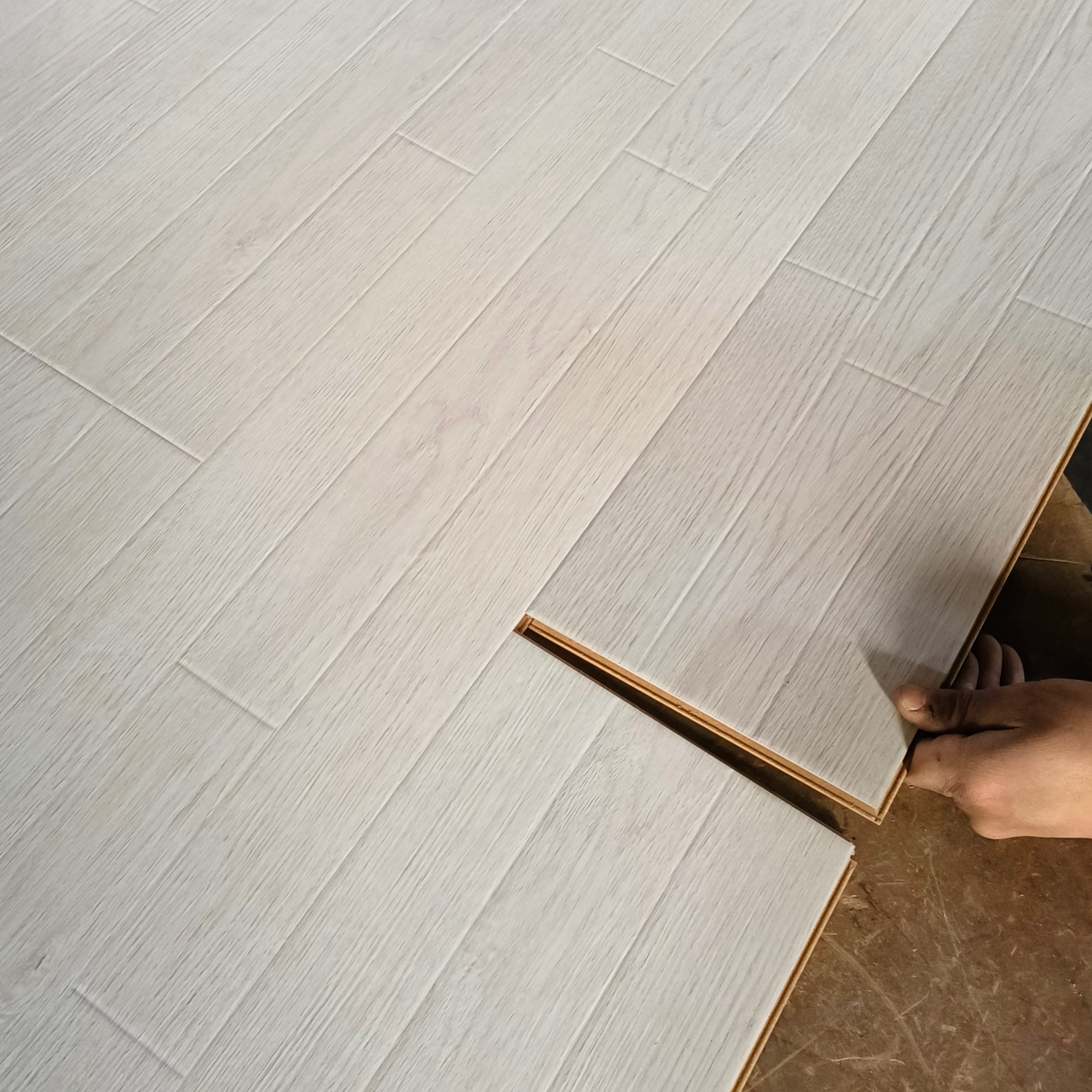
Most spc flooring products are engineered with precision click-lock locking systems that allow planks to be installed as a floating floor without the need for adhesive or nails. This installation method significantly reduces the labor time and skill requirement compared to glue-down or nail-down installations, which translates directly into lower installation costs for larger commercial projects. The floating installation also allows individual planks to be replaced if they are damaged, without disturbing the rest of the floor.
The dimensional stability of the rigid core means spc flooring can be installed directly over most existing hard flooring surfaces, provided they are clean, flat, and structurally sound. This ability to install over existing floors eliminates the cost and time associated with demolition and disposal of old flooring materials, which is a meaningful advantage in renovation projects where minimizing disruption is a priority. The low profile of spc flooring also means that door clearances and transition heights are rarely compromised.
Maintenance Requirements and Total Cost of Ownership
The ongoing maintenance requirements of spc flooring are modest compared to many flooring alternatives. Regular sweeping or dust mopping to remove abrasive grit, combined with periodic damp mopping using a pH-neutral cleaner, is typically sufficient to keep the surface in good condition. There is no need for specialized treatments, waxing, refinishing, or periodic professional cleaning that many other flooring types require. This simplicity of care reduces the total cost of ownership considerably over the lifetime of the floor.
In commercial settings where cleaning protocols are standardized and budgeted, the low-maintenance nature of spc flooring simplifies operations. Cleaning staff do not need special training or equipment, and the floor's resistance to moisture and chemicals means that standard commercial cleaning products can be used without risk of surface damage. This operational simplicity is one of the practical reasons why spc flooring continues to gain specification preference in managed properties.
When viewed across the full lifecycle of an installation — including purchase cost, installation, maintenance, and eventual replacement — spc flooring typically offers a compelling total cost argument. Its durability reduces replacement frequency compared to lower-grade resilient products, and its low maintenance needs reduce annual operating costs compared to natural materials that require periodic professional care. This combination of durability and economy is central to why spc flooring is increasingly positioned as a premium-value choice rather than simply a budget alternative.
FAQ
What makes SPC flooring different from regular vinyl flooring?
Spc flooring differs from standard flexible vinyl flooring primarily in its core construction. The rigid limestone and PVC composite core of spc flooring provides significantly greater dimensional stability, dent resistance, and structural integrity than the flexible fiberglass or felt cores used in traditional luxury vinyl plank. This rigidity allows spc flooring to perform better in temperature-variable environments and under heavy loads, while also enabling installation over more imperfect subfloors.
Is SPC flooring suitable for commercial environments with heavy foot traffic?
Yes, spc flooring is well suited to heavy commercial foot traffic when specified with an appropriate wear layer thickness. A commercial-grade spc flooring product with a wear layer of 0.5mm or greater will withstand the demands of retail, hospitality, office, and healthcare environments while maintaining its surface appearance. The rigid core also resists indentation from heavy furniture, equipment, and concentrated loads that softer resilient flooring options may not handle as effectively.
Can SPC flooring be installed in bathrooms and kitchens?
Spc flooring is fully waterproof and is entirely appropriate for use in bathrooms, kitchens, laundry rooms, and other areas with regular moisture exposure. The rigid core does not absorb water, so the planks will not swell, warp, or delaminate when exposed to spills or high humidity. Standard installation guidelines should still be followed to ensure proper perimeter gaps and correct sealing around fixed fixtures, which helps protect the subfloor beneath the spc flooring installation.
How long does SPC flooring typically last in a residential installation?
In a well-maintained residential installation, quality spc flooring can realistically last 20 to 25 years or more. The actual lifespan depends on the wear layer thickness specified, the level of foot traffic and use the floor receives, and how consistently basic maintenance is performed. Because spc flooring cannot be sanded and refinished like hardwood, the longevity of the surface appearance is primarily determined by the durability of the wear layer, which is why investing in an appropriate specification for the intended use is important.